

The Art of Rapid Construction: Aluminium as the Key to New Architectural Solutions
On the final day of MosBuild 2025, a roundtable discussion titled “The Art of Rapid Construction: Innovations in Architecture — A New Perspective Through the Lens of Aluminium for Modular Building” took place in the Construction Innovation and Masterclass Zone. Leading experts and industry representatives gathered to discuss the future of modular construction and the pivotal role aluminium plays in driving innovation in this field. Let me know if you’d like this tailored for a press release, report, or exhibition summary!
Architecture as a Driver of Modular Construction
Moderator of the discussion, Roman Selin, Head of the Project Group at the Aluminium Association, emphasised that the high speed of construction and the variety of building types are key strengths of modular construction using aluminium. In this context, aluminium serves as a versatile material, providing not only strength and safety but also expressive architectural aesthetics.
According to Selin, aluminium has become an outstanding innovative solution in construction for delivering remarkable architectural projects in recent years — from panoramic glazing in high-rise buildings and structures, to bridge construction, and widespread use in wall and roof cladding systems. Malleable and ductile, aluminium easily takes on any shape. Its natural oxide layer makes it highly resistant to corrosion, meaning that aluminium products offer exceptional longevity.
Thanks to floor-to-ceiling glass façades, modular buildings gain a sense of visual lightness and blend seamlessly into natural or urban surroundings. Today’s clients no longer view modular buildings as mere temporary cabins, Selin adds. There is growing demand for sales offices, glamping structures (including A-frame homes), shops, cafés, and even private residential houses. Additionally, the representative from the Aluminium Association highlighted the long service life of aluminium glazing systems, their environmental friendliness, high light transmission, and the ability to apply any type of finishing.
In concluding his speech, the speaker listed the advantages of aluminium as follows:
- Low weight
- High strength
- Structural efficiency ratio
- Corrosion resistance
- Durability
- Environmental friendliness
Decorative possibilities and façade solutions
Ivan Zinovkin, Project Manager at "Alternative" LLC, spoke about the potential of ventilated facades in low-rise construction. These facades have a service life of up to 50 years, and installation can be carried out at any time of the year and in any location. This makes the technology especially convenient for projects in remote and challenging climatic conditions.
Andrey Petrov, Sales Director at "Gravis" LLC, discussed the importance of the aesthetic appeal of modular building façades. The company specialises in the painting of aluminium and steel products, as well as the production of sheet ACP and SCP. Future plans include anodising rolled aluminium products.
When talking about the advantages of aluminium façades for modular buildings, he highlighted the durability of the coating, protection from corrosion and environmental factors, a service life of over 20 years without loss of quality in the paintwork, ease of operation and maintenance of the façade cladding, fire safety, and decorative possibilities. Additionally, it is important to emphasise that any architectural design — from façades for social institutions and sports complexes to modern residential complexes — can be implemented in a short period.
The colour and texture solutions in aluminium are also impressive: from concrete and wood imitation to natural stone and exclusive prints. The company's latest development, PlastCover, is a patterned film that allows for the creation of a unique façade that is resistant to external impacts, concluded the representative from "Gravis" LLC.
Modular Construction for Public Sector Needs
Vladimir Obukhov, Technical Director at "Elmaco" LLC, presented case studies on building structures for the Ministry of Emergency Situations (MChS), Ministry of Internal Affairs (MVD), and other government agencies. Among the advantages of modular construction, the expert highlighted the high level of factory readiness of the modules for on-site installation, as well as innovative thermal and sound insulation materials. Modular solutions allow for moving away from traditional capital structures in favour of modern buildings tailored to the client's specific needs. One example is an administrative building for Moscow government employees, which was completed in just two nights, and a hotel built on the "Moskino" film cluster site, both assembled from modules by "Elmaco" LLC.
Application Experience and Project Geography
Petr Likholitov, Project Manager at "Avista Modul Engineering" Group of Companies, discussed the scale of aluminium and modular technology applications. The company's project geography spans all of Russia — from Kaliningrad to Kamchatka. The main clients are enterprises in the oil and gas sector. However, modular construction is also successfully applied in the tourism industry, with hotel complexes, barnhouses, and bungalows in Altai and Sheregesh, for example. The speaker specifically noted that the structures take into account climate conditions, seismic activity, and meet modern comfort standards.
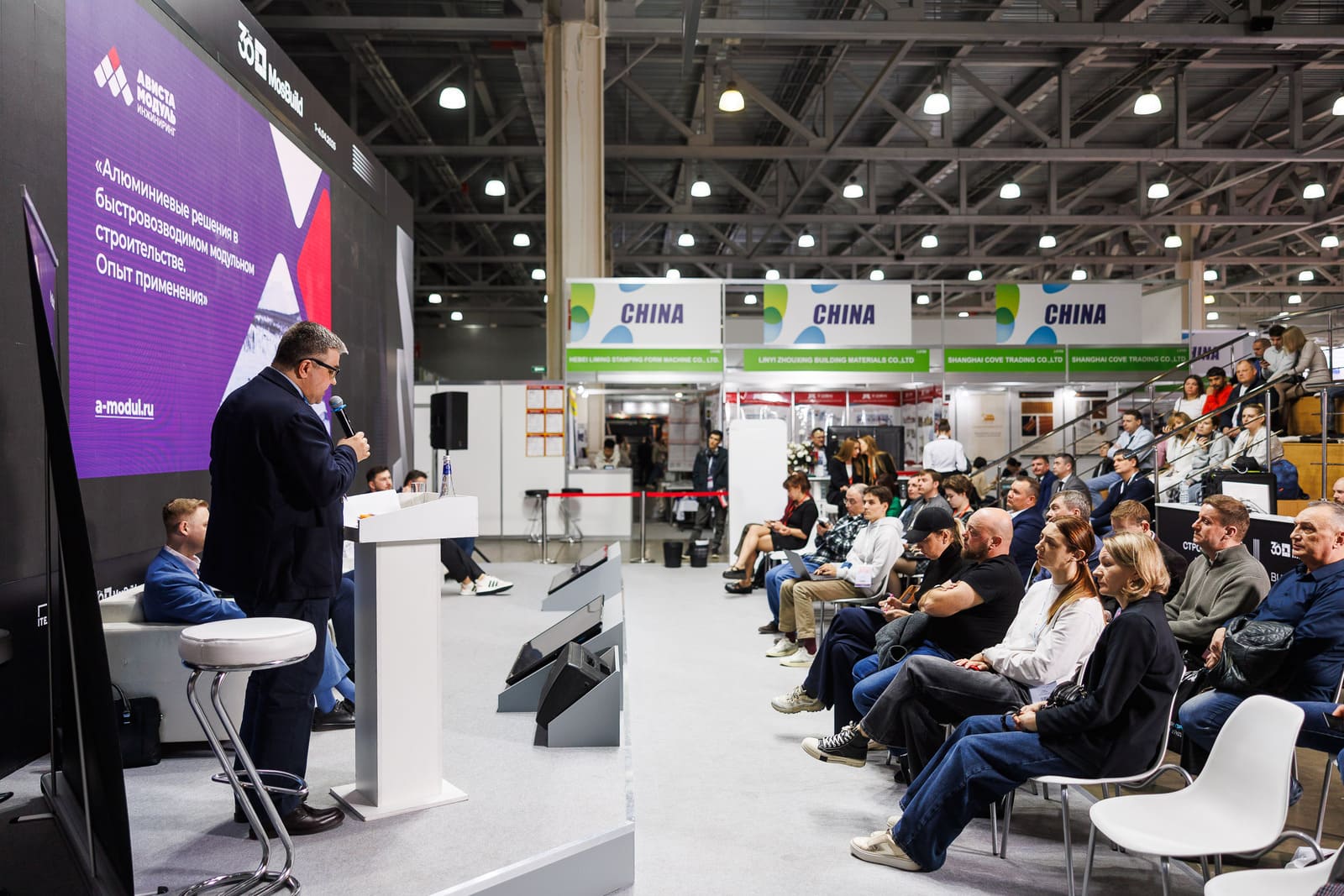
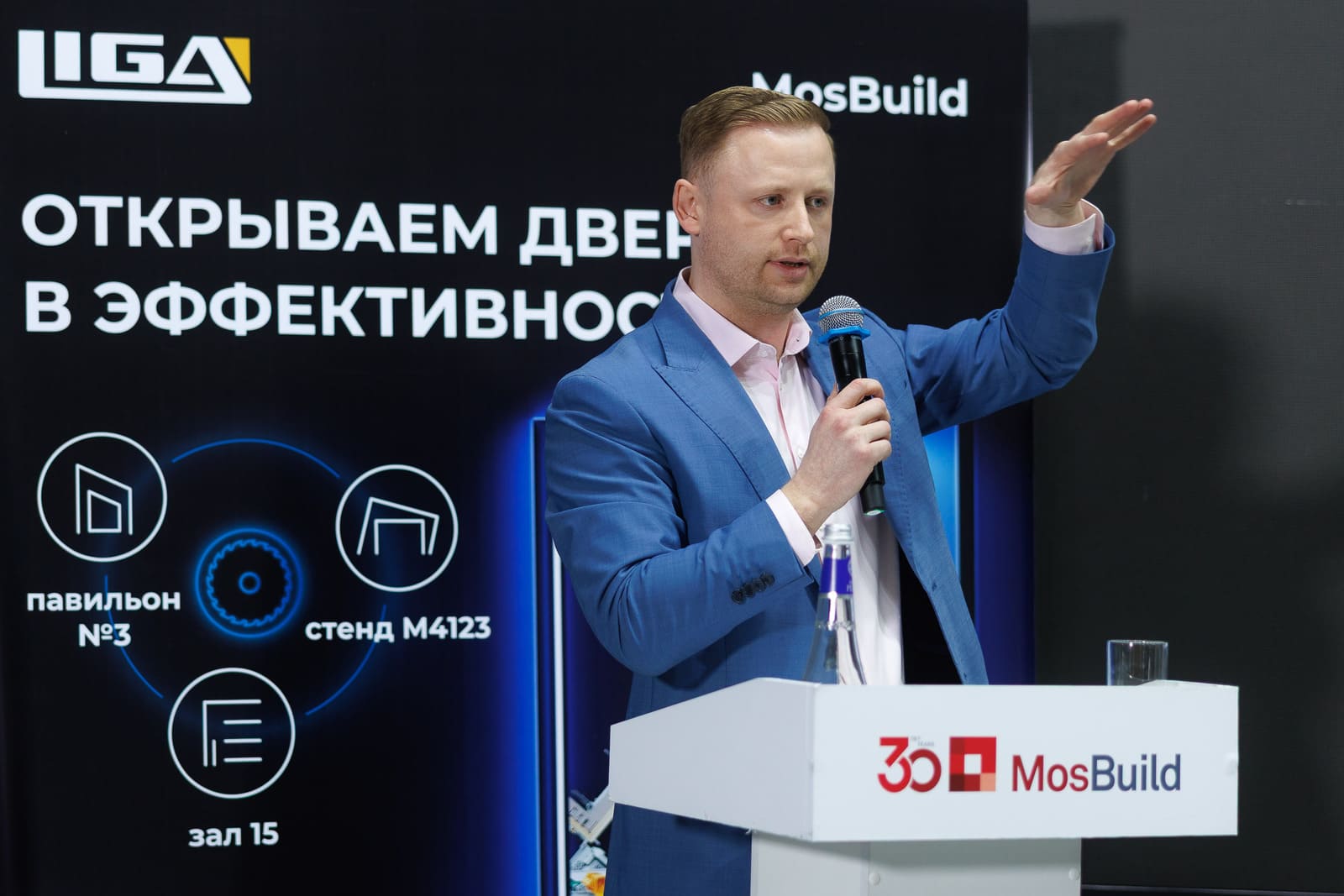
The company is also actively developing the skoroDOM direction — modular solutions for recreation centers and the tourism industry as a whole. As Likholitov summarized, it is the tourism industry and government ministries and agencies that are the main drivers of the development of modular construction.
Aluminium as the Foundation of Mobile Architecture
Maxim Kermenov, Development Director at Alums Group of Companies, discussed the versatility of aluminium. The company's manufacturing facilities are localized in Russia, while also incorporating the best global practices. It offers a variety of constructions — pavilions, block modules, small architectural forms, and more. Aluminium structures are lightweight and mobile: they can be disassembled, transported, and reassembled, as highlighted by the speaker. A prime example is the terminal at Mineralnye Vody Airport, built in just a month and a half, and the pavilions at the Russia exhibition.
At the conclusion of the discussion, the moderator summarized that Russian companies are demonstrating readiness for the challenges of the time and actively implementing innovations in modular construction. Aluminium is becoming not just a material, but a platform for architectural creativity, functionality, and sustainability. Thanks to modern approaches and technologies, almost any vision of the client can now be realized — quickly, beautifully, and reliably.

